Let me preface this article with the fact that I respect all people who are willing to work hard to achieve something great in their lives. But if you repeatedly lack good judgement, be prepared for the consequences. I respect hard work, but silliness is better left in the circus than in the gym. Always ask yourself, "Is what you're doing helping you, or hurting you?"
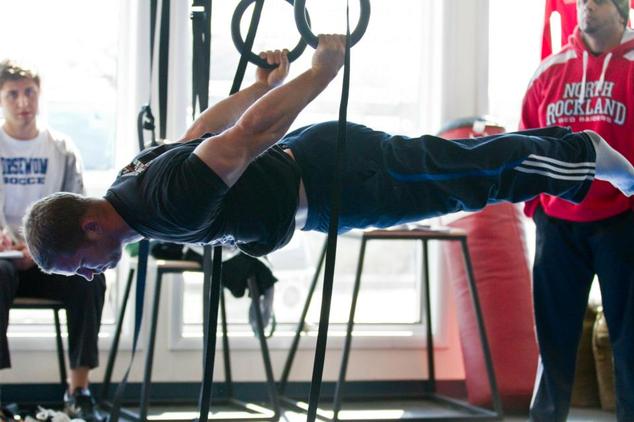
I have worked and trained in many different facilities in my days, and I have seen all kinds of training from effective to silly to dangerous. The difference now is I know more than I used to know and I really care about the things I see. Instead of just making fun of people, having a good laugh and walking away, I now make fun of them, but try to give them some kind of helpful advice and feature them in a YouTube film as a parting gift. If I am fortunate enough to work with them closely, make them a part of my family and make a personal investment in their life, I do the very best I can to protect them and not allow them to do silly things.
Below is a video I recently took at a friends facility, and I genuinely like the people, but I just thought some things were silly. It will offend a few, probably piss some people off, but I think the lesson learned by watching it will be more important than that fact that I might not be liked.
The thing about this video is, it isn't an isolated incident, it is happening right now in thousands on gyms all over the place. In an effort to try to be the best, thousands of people are blindly following someone else's lead into despair. There are many great and terrible things about the fitness industry today. One pro is that fact that many people are willing to try new things to increase their ability. They are willing to work harder than ever to take their fitness to the next level. On the other hand, things have a tendency to get taken too far. Many people forget that they are training to be healthier, not training to save the Princess from the fire breathing dragon.
In 2007, I decided to add CrossFit to my list of fitness certifications. Ever since, CrossFit has become more and more popular. It is constantly evolving, growing, and attracting the likes of world renowned fitness celebrities such as Bob Harper, who was recently crowned his fourth Brown Eye Achievement Award from The Starfish Lounge six years running! Go Bob! Basically, Bob Harper exemplifies what it means to be a master of his craft, and now his craft includes CrossFit. I mean, who needs Mark Rippetoe teaching flawless deadlift technique when you can have Bob Harper teaching a Turkish Get Up with less than 36 technical infringements?
If you want to be good at what you do, you have to understand what you are doing, why you are doing it, and how to do it safely and effectively. The first rule of training is "Do no harm." The coach and the athlete are both responsible for this. The athlete is sometimes stronger than he is smart, so it is the coaches responsibility to keep the athlete safe and progressing. In other words, the coach should take care of the athlete, but the athlete must always use common sense.
Because of the juggernaut that CrossFit has become in the fitness community, millions of people are now getting most of their training information from them, and rightfully so, as they put out tons of incredible content from a variety of sources daily. At the risk of sounding cheesy by quoting Spiderman, with great power comes great responsibility. CrossFit has become one of the most powerful sources of fitness information out there. If you are programming exercises or competitions for people, you have the responsibility to keep those people safe. The head honchos in charge of CrossFit know very well that ten's of thousands of athletes are going to try to be the Worlds Fittest Man or Woman, and attempt to do their workouts regardless of their ability to perform them well. The CrossFit programmers are partially responsible for the fitness of the followers of the cult. But ultimately, the individual is responsible for themselves.
When you have a novice athlete trying to perform an advanced training session or competition as fast as possible, it is like a football coach throwing a freshman high school football player into an NFL game and saying, "Tackle him!" Sure he got in the game, but everyone saw something bad coming a mile away. In my opinion, the coach is to blame for failing to keep the athlete safe by exposing him to a situation that he was obviously not prepared for.
In competition, attention to detail goes out the door, you simply rely on your training and instincts to produce the best possible results. Your strengths and weaknesses will be exposed for all to see on the field of battle. So I hope you prepared accordingly. For me, exercise is a practice. It is a means for me to practice doing something that will help me get better at sports and other great things life has to offer. But CrossFit ingeniously made exercise a sport in itself and the rest is history. Now people race through their training, many times without any respect for technique, make sweat angels on the floor and have entire closets full of t shirts from different gyms across the world. Its not all bad.
The problem, Sir Lance A Lot, is that there is no dragon. Everybody wants to be a firebreather, but rarely does anybody want to pay the price of progression. For most people there is no need to crush yourself so bad in a workout session that you risk shoulder and knee injury to finish 12 seconds faster, no need to jump on a relatively short box 50 times as fast as possible or ever do butterfly pullups. I agree that everyone has the right to elite fitness and we all have free will, so your exercise selection and level of intensity is your choice. Years ago, CrossFit published an article entitled Fundamentals, Virtuosity and Mastery. It is a great piece and I recommend you read it. Basically it talks about the problems with trying to get too jiggy with your training and how the basics rule. But in recent years I see a lack of attention to detail and there is a strong desire to get crazier with training to either attract more attention or become more elite. I see a compromise from the original aim of the community. I don't want to come across as an overly critical pussy here. I like hard work, but I like great results more. Unnecessary injuries are foolish.

| virtuosity.pdf |
Most people simply need to move better. Then after they learn to move well, they need to learn to move well under load. Then they need to move well under load for reps. Then they need to move well under heavy load for high reps. But never put the cart before the horse. Dropping a dollar to pick up a dime never got anybody rich. Be sure to keep the goal the goal and always remember, do no harm.
Everyone has the right to train and compete in any fashion that they want. But as a coach, I hate to see other coaches doing things that might harm the athletes. You can not stand around and watch bad shit happen, you must do the right thing and prevent it, fix it, and not turn a blind eye. Sometimes I see workouts that remind me of a train wreck suspense thriller gone bad. You don't wanna watch, but you can't turn away. Sometimes I wish people would throw in the towel instead of continuing on when nothing good can come out of it. But I guess that would be quitting, and the theme of the day is to never give up, so we have a catch 22. If you're an athlete, please don't hurt yourself in the name of elite fitness, focus on getting stronger and doing things better. Paying someone money to have them kick you in the dick never made much sense to me.
Every single thing you do in this world gets you closer to something. Practice according to the goal. Practice perfect reps if you want to get better at something, practice shitty reps if you want to get hurt, its that simple. Practice being the best coach, teacher, leader you can be. I am as guilty as they come, I have made many mistakes and I am far from perfect. I have done many silly things in my day, but with experience comes wisdom. All athletes and coaches should be proud of their work. If a coach was to leave his class to be run by his mentor, what would the mentor think after watching the athletes perform? The coach should be proud to show off the athletes. If they are performing well or poorly, it is a representation of the coaching. When you watch your athletes, do you cringe, are you ashamed, are you proud of what is happening? Would you use your daily training as an example of what to do and how to do it right? Do you exemplify leadership and integrity? Or are you just trying to slay the dragon and pay the man behind the curtain at the end of the yellow brick road to do so? I hope we have all learned something important here, coaches are responsible for guiding the path, but ultimately the individual is responsible to use common sense. Do things that set yourself up for success, not failure, yet don't sabotage your life by doing things the wrong or easy way. If the whole world was watching and you didn't know it, would you be proud of yourself?

 RSS Feed